
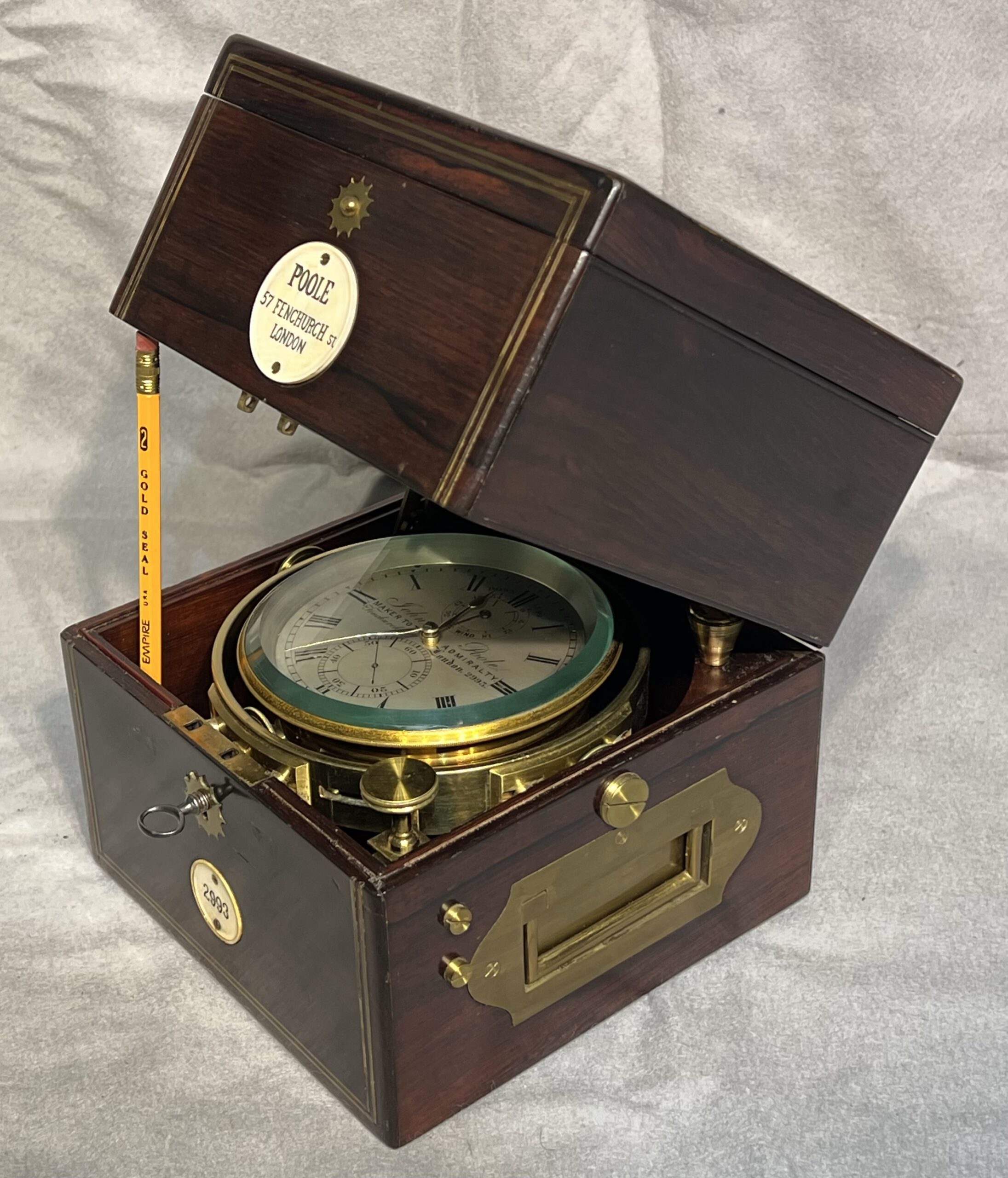
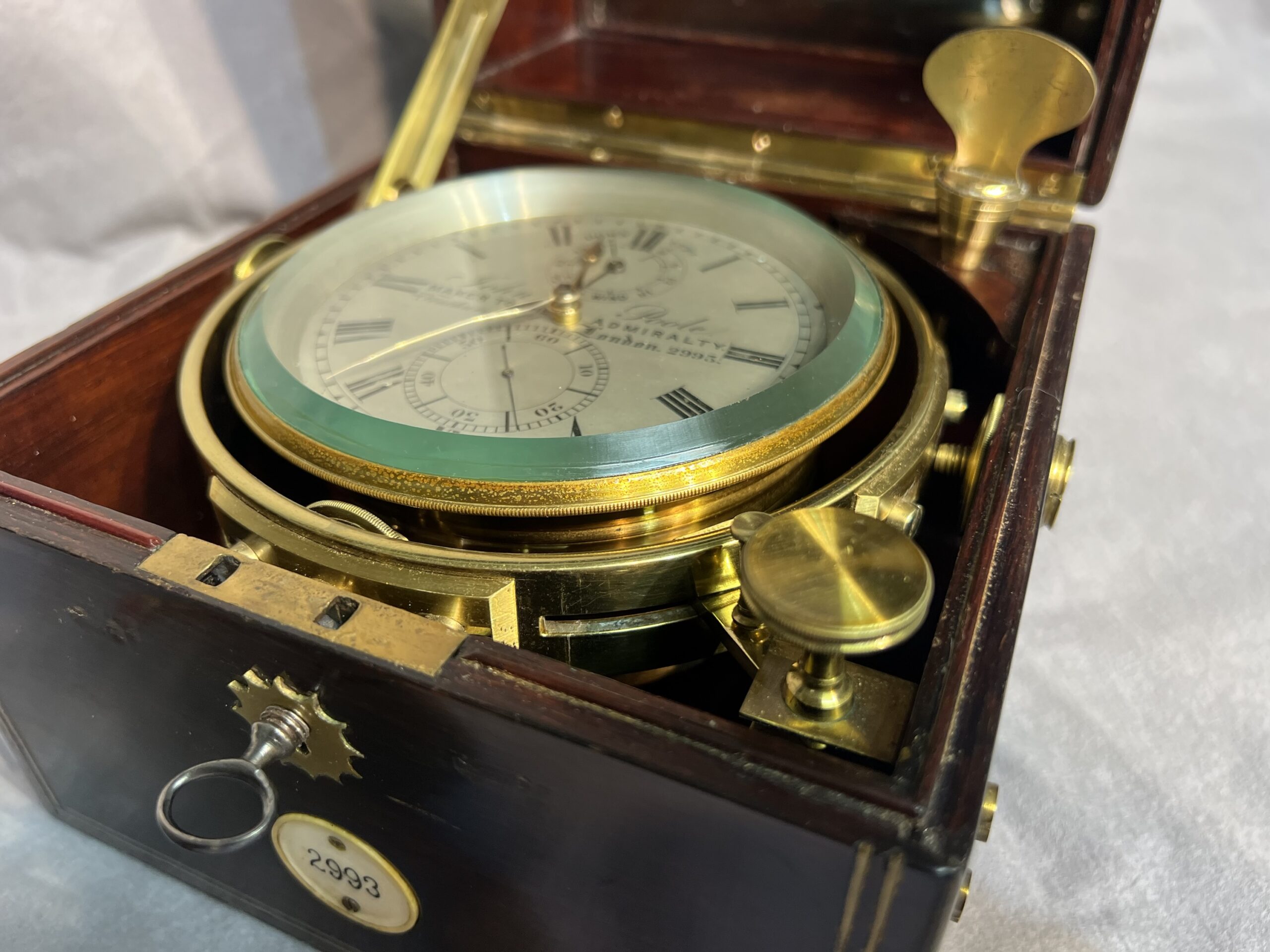
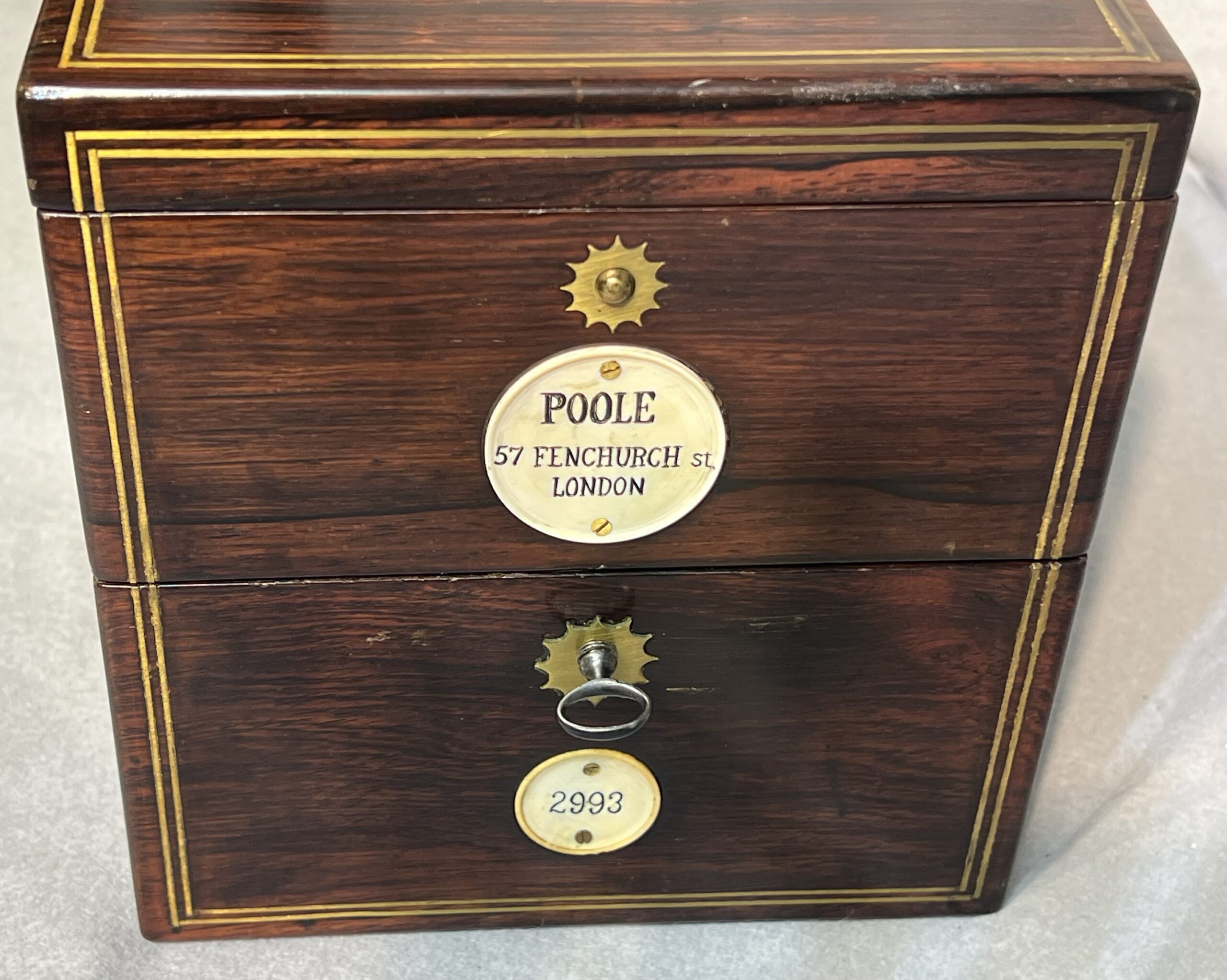
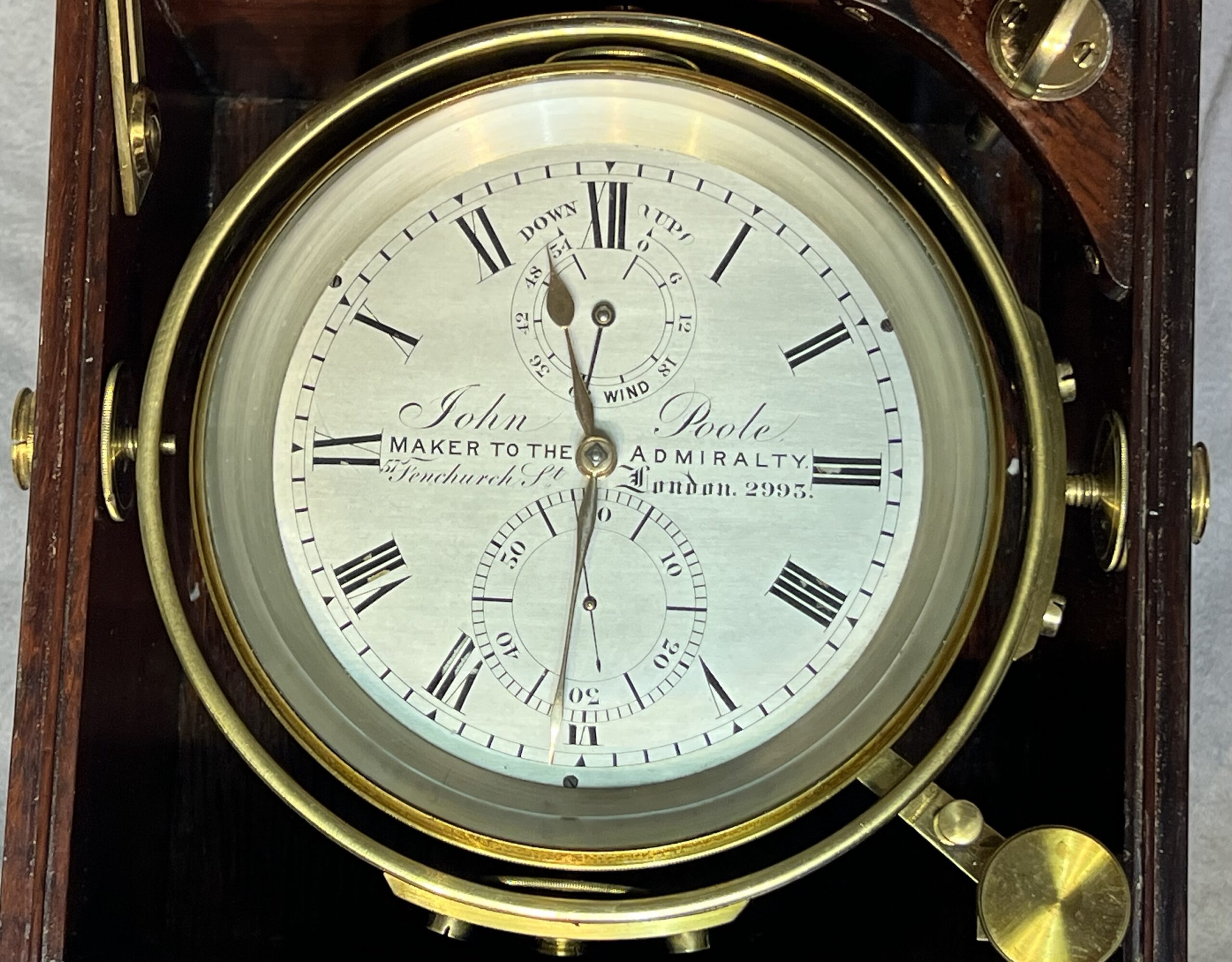
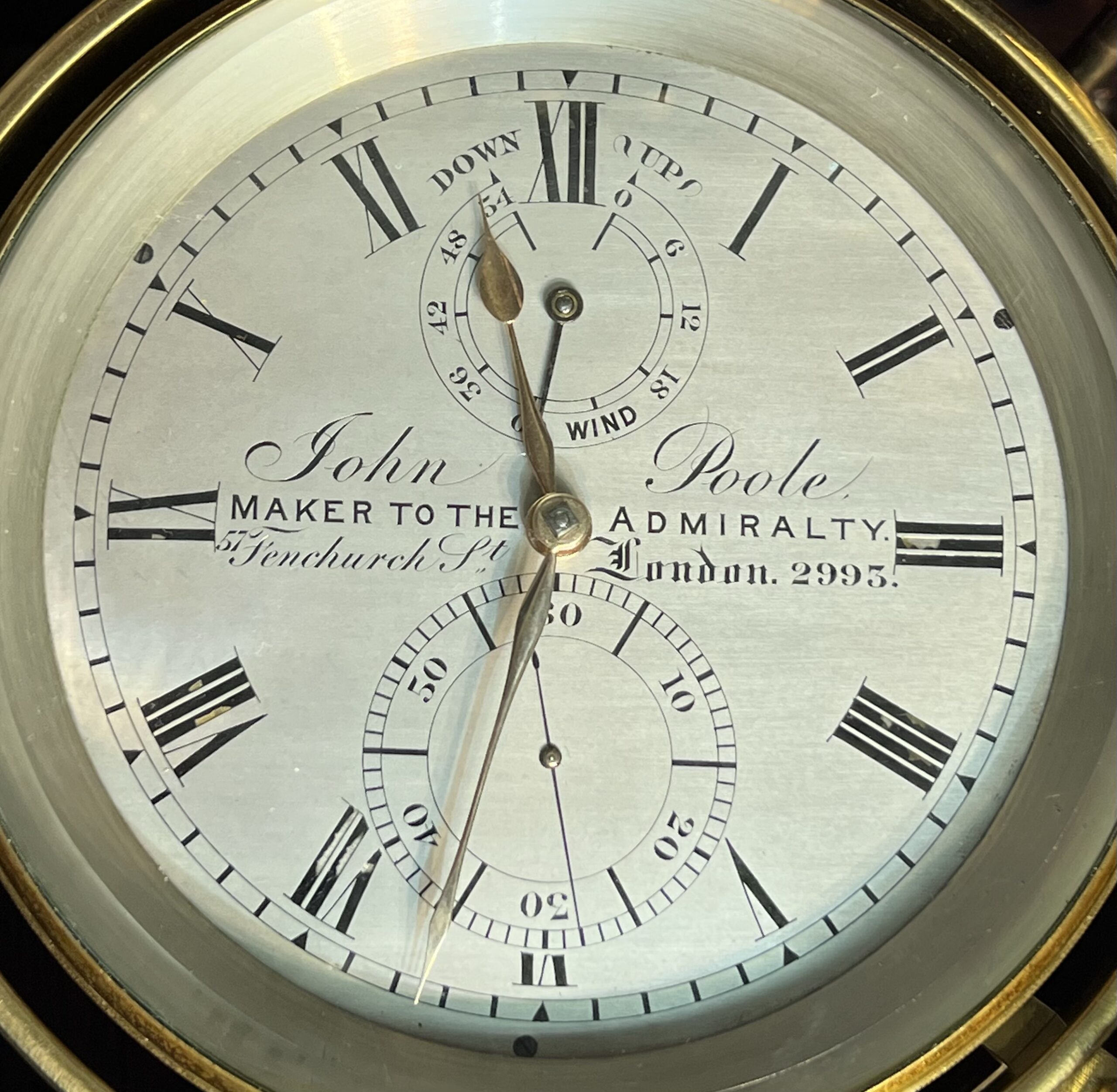
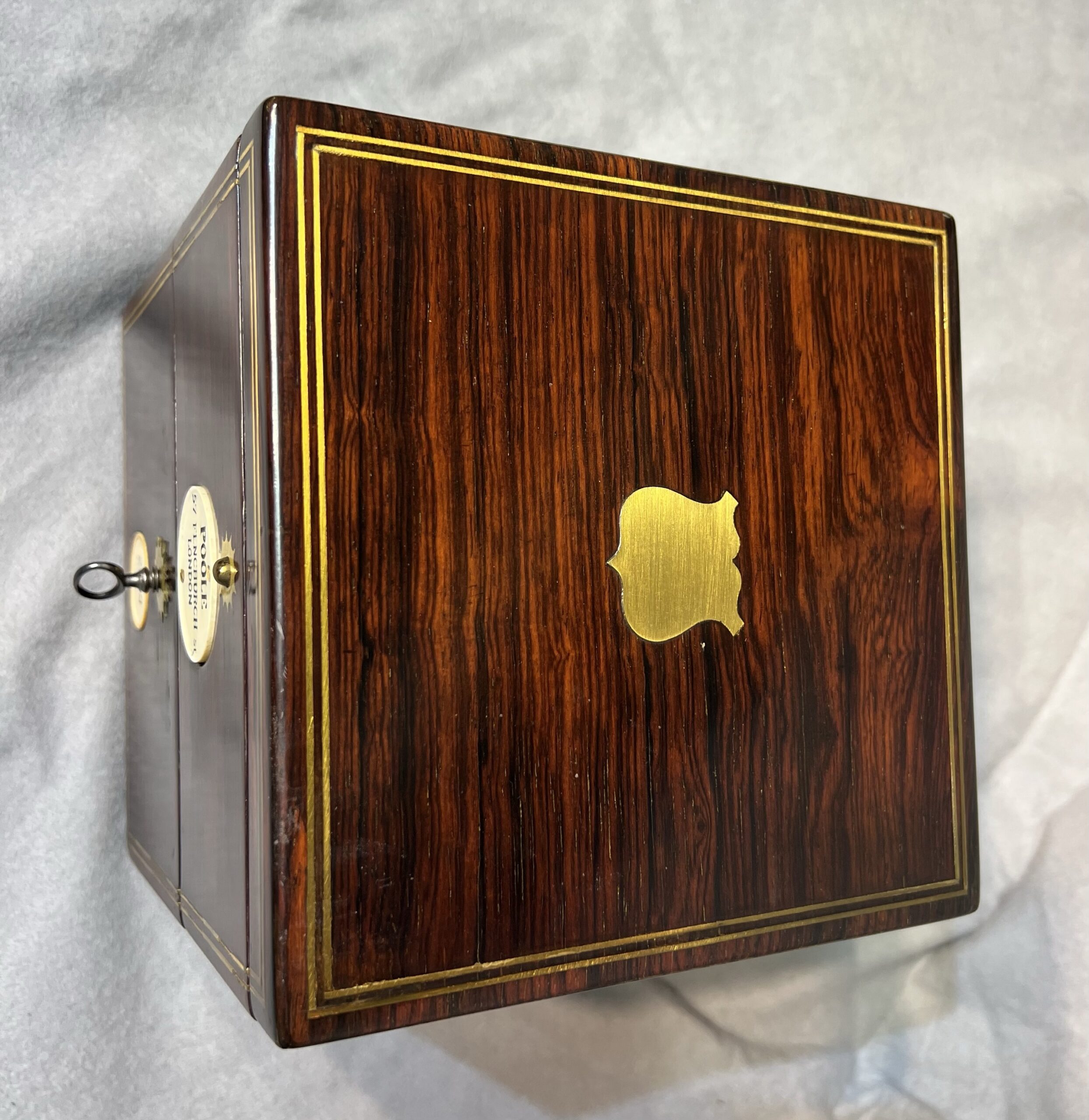
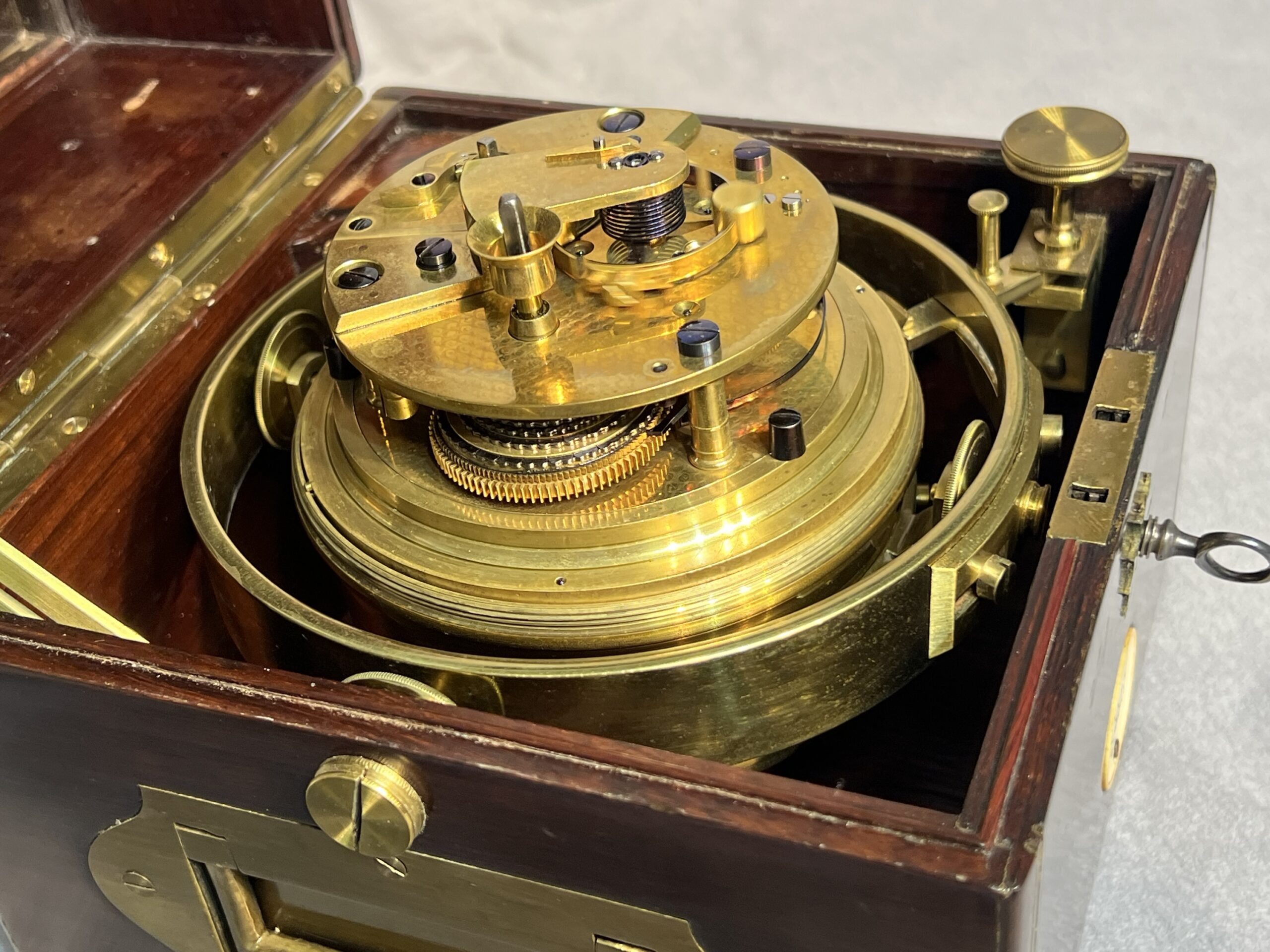
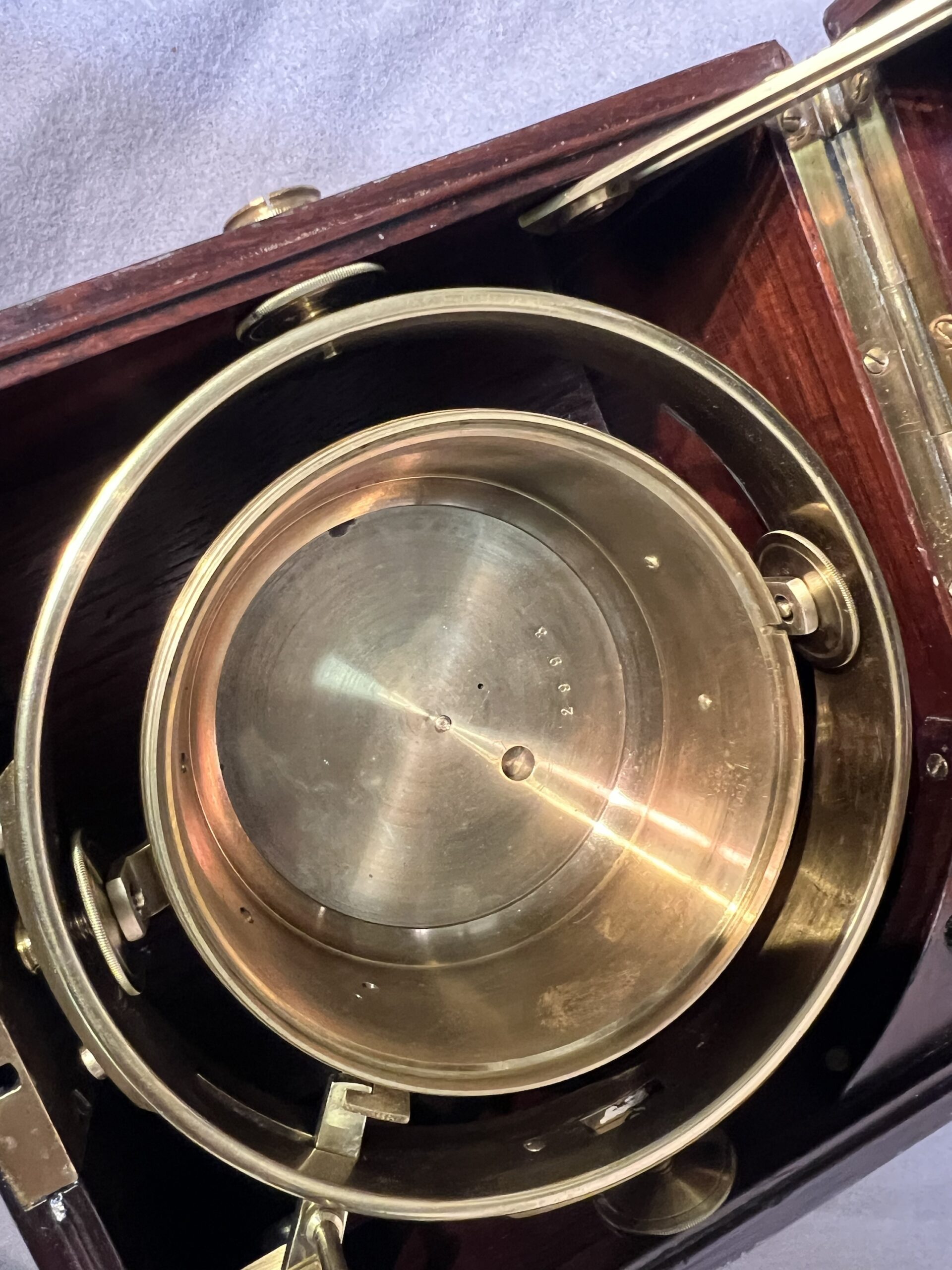
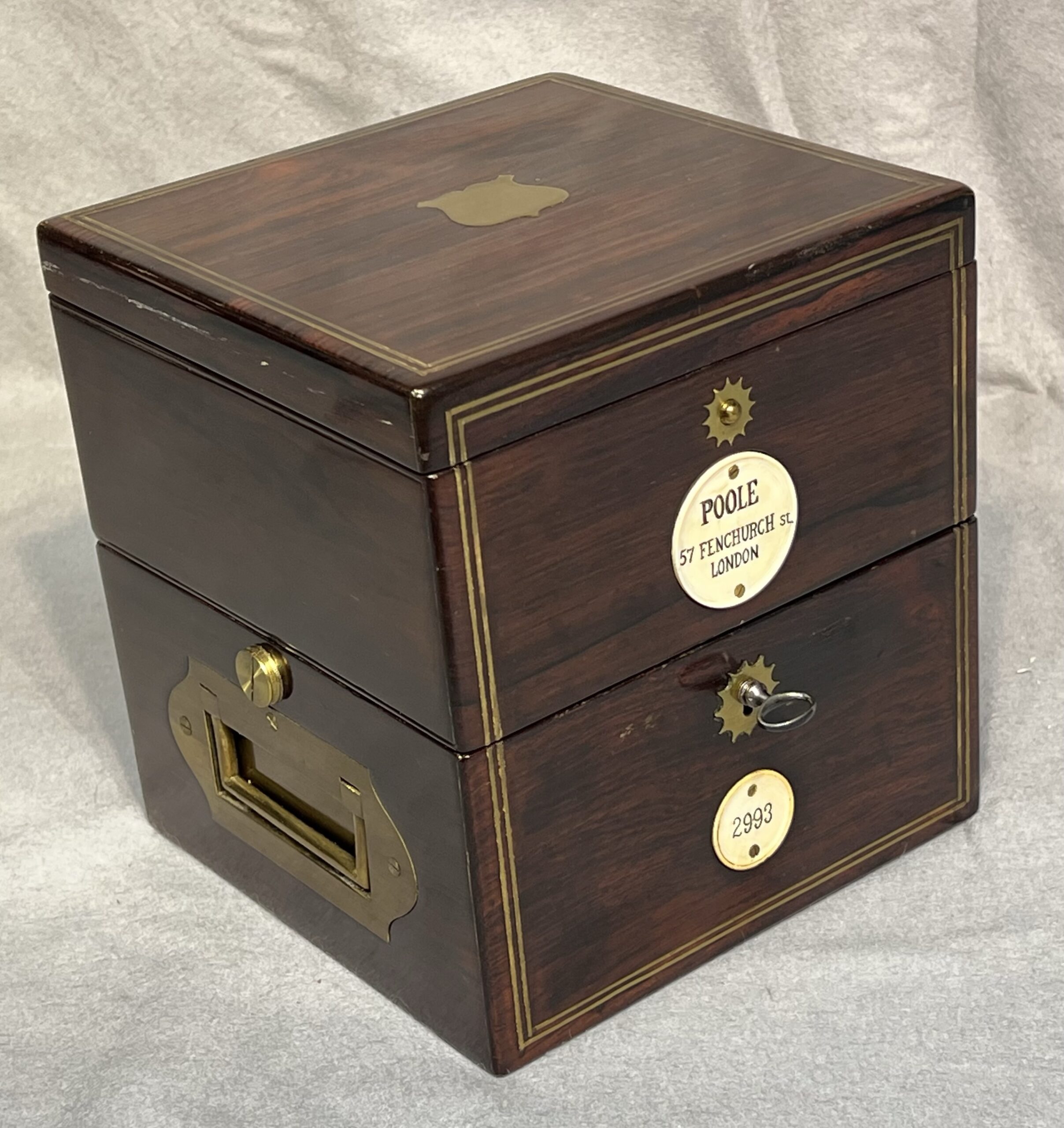
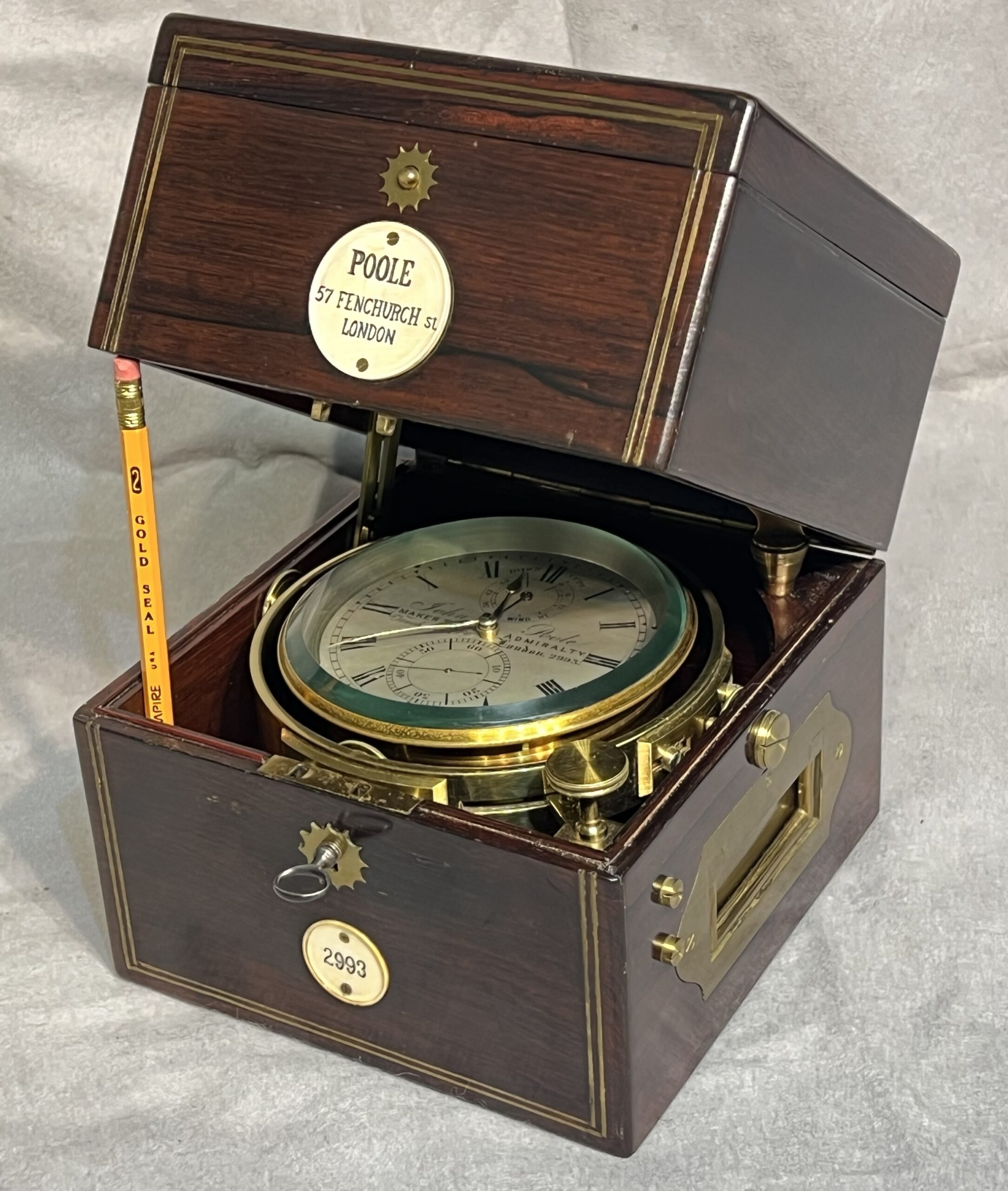
This beautiful example is in very good condition, in its original rosewood and brass inlaid case with a period key. The chronometer displays the maker’s serial number on the face, the case, and the inside bowl, #2993. The two bone medallions on the face are the address at 57 Fenchurch St, London and the other below with it’s serial number.
The movement has an Earnshaw spring detent escapement, compensation balance Poole’s auxiliary, blued steel helical spring, free sprung, silvered dial with Roman numerals and subsidiary dials for the seconds and up and down.
The inaccuracy of dead reckoning became apparent as soon as navigators ventured far out to sea. Countless methods of measuring longitudes were proposed. The simplest all used the same fundamental principle- compare the local sun time at a given instant with the time at the prime meridian for the same instant- the distance would give the longitude.
Local sun time could be obtained through observation of the sun with reasonable accuracy, at least at midday, but that left the problem of knowing the exact equivalent time at the prime meridian. A timepiece was required that kept exceptionally accurate time and was not affected by the motion of a ship or changes in pressure, temperature or humidity.
Catalog; SKU: 0004049